

The Coming Shift: AI and Weightlifting
Weightlifting, at its core, is about precision. The smallest adjustments in technique can mean the difference between a successful lift and a missed attempt, or even an injury. For decades, that precision has been honed through dedicated coaching, meticulous video review, and countless hours of practice. But these methods have limitations. Access to qualified coaching is expensive and geographically restricted, and even the best coach can miss subtle flaws in technique.
Things are about to change. We’re on the cusp of a revolution in how weightlifting techniques are taught and refined, driven by advancements in artificial intelligence. AI-powered form analysis promises to deliver personalized, objective feedback to lifters of all levels, making high-quality technique correction far more accessible. It won’t replace coaches, but it will dramatically alter their role and the landscape of strength training.
Imagine a system that can analyze your lifts in real-time, identifying areas for improvement with an accuracy that surpasses the human eye. That’s the potential of AI in weightlifting. This isn't about robots taking over the gym; it's about providing athletes with tools to understand their movement patterns better, optimize their performance, and drastically reduce their risk of injury. The coming years will see this technology mature from a novelty to an essential component of serious weightlifting programs.
The shift isn’t just about better technique. It’s about democratizing access to expertise. Someone training in a rural area, or without the financial means for a coach, could potentially receive feedback comparable to that of an elite athlete working with the best in the world. This is a powerful idea, and one that’s rapidly becoming a reality.
Decoding Movement: How AI Sees Your Lift
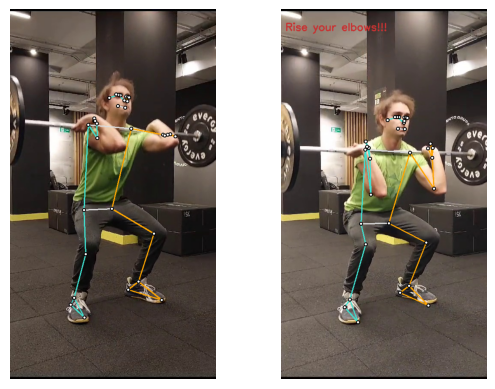
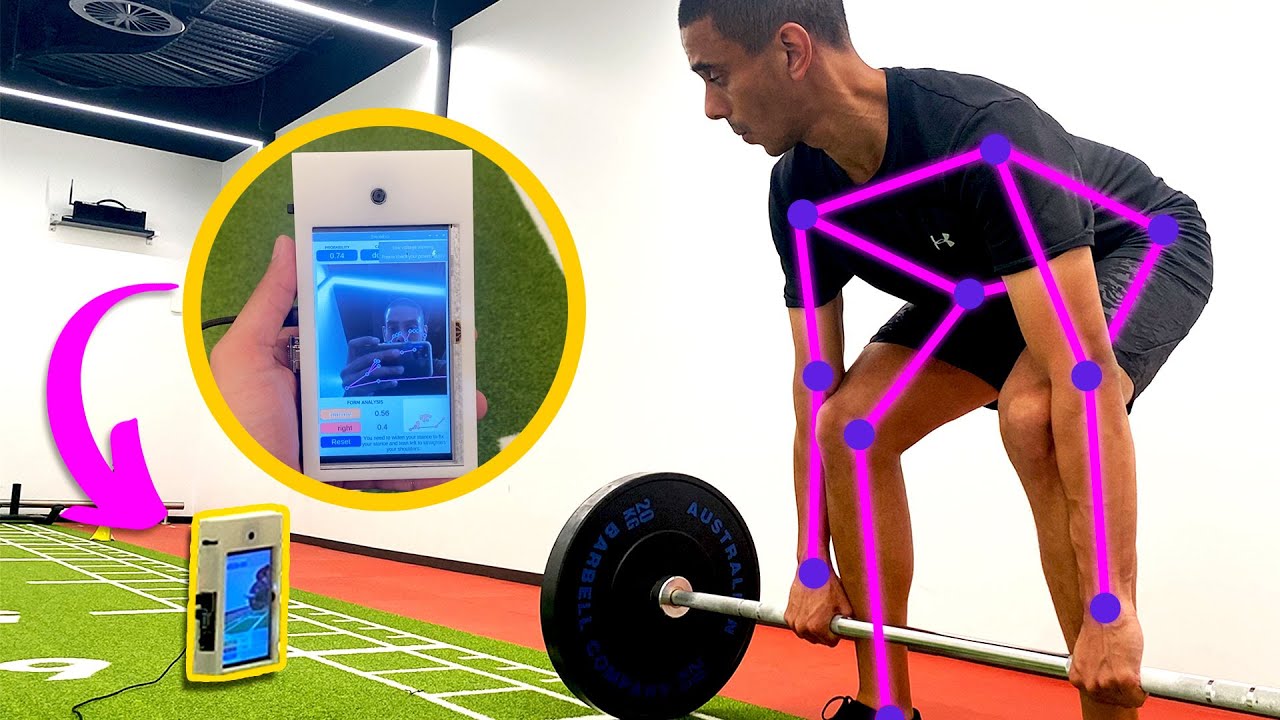
At the heart of AI form analysis lies computer vision. This isn’t about the AI "understanding’ what a squat is, but rather about its ability to identify and track specific points on the human body. This is achieved through a process called pose estimation, where algorithms identify key joints – elbows, knees, hips, wrists – and map their positions in 3D space. Think of it as the AI creating a skeletal ‘wireframe" over your body during a lift.
Skeletal tracking is the continuous monitoring of these joint positions over time. This allows the AI to analyze not just where your joints are, but how they’re moving. Crucial data points include joint angles, bar path, velocity, and acceleration. The AI isn’t merely watching you lift; it’s collecting a stream of numerical data that describes your movement in detail.
The challenge isn’t simply identifying joints, but maintaining accuracy when those joints are obscured – a common problem in weightlifting. When the bar is in front of your thighs during a deadlift, it can hide your lower back, making accurate pose estimation difficult. Sophisticated algorithms are being developed to account for these occlusions, using predictive modeling and contextual information to fill in the gaps.
Different AI systems prioritize different data points. Some focus heavily on bar path efficiency, while others emphasize joint angles and velocity. The most effective systems will likely be those that integrate multiple data streams, providing a holistic understanding of the lift. This is a complex process, but the ultimate goal is simple: to translate human movement into quantifiable data.
Beyond the Eye: AI's Accuracy Advantage
Humans are remarkably good at many things, but objective, consistent analysis isn’t one of them. A coach, even a highly skilled one, is subject to fatigue, bias, and momentary distractions. They might focus on one aspect of a lift while missing a subtle flaw elsewhere. AI, on the other hand, can analyze every frame of a lift with unwavering consistency and objectivity.
Consider the subtle rounding of the back during a deadlift. A human coach might catch it occasionally, but an AI can identify it every time it occurs, and even quantify the degree of rounding. Similarly, AI can track bar path deviations with precision that’s impossible for the human eye. This level of detail allows for far more targeted and effective feedback.
However, it’s important to acknowledge that current AI isn’t perfect. It can struggle with novel movements – lifts that deviate significantly from standard form. It can also be thrown off by unusual body types or variations in lifting style. The AI’s "understanding" of proper technique is based on the data it was trained on, and it may not be able to account for all possible scenarios.
The most compelling vision isn’t about AI replacing coaches, but about AI augmenting their abilities. A coach can use AI analysis to identify areas for improvement that they might have missed, and then use their expertise to provide personalized guidance and motivation. It’s a collaborative approach, combining the objectivity of AI with the nuanced understanding of a human coach.
Human Coach vs. AI Form Analysis for Weightlifting Technique
| Criteria | Human Coach | AI Form Analysis | Notes |
|---|---|---|---|
| Consistency | Variable, dependent on coach experience & fatigue | Generally consistent, repeatable analysis | AI provides the same level of scrutiny for every repetition. |
| Objectivity | Subject to personal bias and interpretation | Highly objective, based on pre-defined parameters | AI doesn't have preconceived notions about an athlete's potential. |
| Cost | Higher, ongoing expense | Potentially lower, one-time or subscription based | AI solutions may offer a more affordable long-term alternative. |
| Accessibility | Limited by coach availability and location | Greater accessibility, available anytime, anywhere | AI can provide feedback remotely, overcoming geographical barriers. |
| Data Depth | Relies on coach's observational memory and notes | Potential for extensive data collection and analysis | AI can track multiple joint angles, velocities, and force plates (when integrated). |
| Real-time Feedback | Immediate, but can be delayed during complex lifts | Near real-time, dependent on processing speed | AI feedback may have a slight delay, but is continuously available. |
| Personalization | Highly personalized, adapts to individual needs | Increasingly personalized, but relies on algorithm training | AI is improving in its ability to tailor feedback, but currently less nuanced than a skilled coach. |
| Complexity of Correction | Better for complex, nuanced corrections | Effective for identifying common form errors | AI excels at identifying deviations from established technique models, while a coach can address more subtle issues. |
Qualitative comparison based on the article research brief. Confirm current product details in the official docs before making implementation choices.
Current Tools: A 2024 Snapshot
The market for AI-powered form analysis in weightlifting is still relatively nascent in 2024, but it’s growing rapidly. Currently, most tools focus on bodyweight exercises and general fitness movements. Apps like HomeCourt use your phone's camera to analyze basketball shooting form, and similar technologies are being applied to exercises like push-ups and squats. These systems typically provide real-time feedback on form, helping users to maintain proper technique.
Specific tools tailored to Olympic weightlifting are less common, but several companies are beginning to emerge. Some platforms offer video analysis with AI-powered pose estimation, allowing users to upload videos of their lifts and receive feedback on joint angles and bar path. These platforms often come with subscription fees, ranging from $20 to $100 per month, depending on the features and level of analysis provided.
Smart mirrors, like those offered by Mirror and Tempo, incorporate AI-powered form analysis into their interactive fitness experiences. These systems use built-in cameras and sensors to track your movements and provide real-time feedback. However, they tend to be expensive, costing upwards of $1500 for the hardware and requiring a monthly subscription for access to classes and personalized training.
Many of these early-stage tools struggle with accuracy and reliability. The quality of the analysis can vary significantly depending on lighting conditions, camera angle, and the complexity of the movement. It’s also important to note that many of these systems are still under development, and their algorithms are constantly being refined. While promising, they are not yet a replacement for experienced coaching.
Safety First: Reducing Injury Risk
The most significant benefit of AI-powered form analysis is its potential to reduce injury risk. Many common weightlifting injuries – lower back pain, knee problems, shoulder impingement – are directly related to improper technique. By identifying and correcting these flaws, AI can help lifters stay safe and avoid debilitating injuries.
For example, AI can detect rounding of the back during a deadlift, a common error that puts excessive stress on the spinal discs. It can also identify improper knee tracking during a squat, which can lead to ligament damage. By providing real-time feedback, AI can help lifters correct these errors before they become ingrained habits.
Personalized feedback is key. What constitutes "proper’ form can vary depending on individual anatomy and biomechanics. AI can analyze a lifter’s unique movement patterns and provide tailored recommendations to address their specific weaknesses. This is something that generic training programs simply can"t offer. Referencing resources like the Olympic Weightlifting Area Training Manual from UCSB Recreation provides a solid foundation for understanding proper technique and safety criteria.
However, AI isn’t a substitute for common sense. It’s crucial to listen to your body and stop if you experience pain. AI can identify potential risks, but it can’t feel pain. It’s up to the lifter to use their judgment and prioritize their safety.
The 2026 Forecast: What to Expect
By 2026, we can expect to see significant advancements in AI-powered form analysis. Algorithms will become more sophisticated, capable of analyzing a wider range of movements with greater accuracy. We’ll likely see the integration of AI with wearable sensors, such as inertial measurement units (IMUs), which can provide more detailed data on joint angles, velocity, and acceleration.
Real-time feedback via augmented reality (AR) is another likely development. Imagine wearing AR glasses that overlay visual cues onto your lift, guiding you to maintain proper form. This could revolutionize the way weightlifting is taught and practiced. Personalized training programs, tailored to an individual’s biomechanics and goals, will become increasingly common.
The democratization of access to high-quality coaching is perhaps the most exciting prospect. AI-powered tools will make it possible for anyone, anywhere, to receive personalized feedback on their technique, regardless of their financial resources or geographic location. This could lead to a significant increase in participation in weightlifting and other strength sports.
However, several hurdles remain. Data privacy is a major concern, as AI systems require access to sensitive personal data. Algorithm bias is another potential issue, as AI algorithms can perpetuate existing inequalities if they are trained on biased data. And, of course, cost remains a barrier to entry for many. Overcoming these challenges will be crucial to realizing the full potential of AI in weightlifting.
Beyond Technique: Performance Enhancement
While injury prevention is a primary benefit, AI also holds significant potential for performance enhancement. By analyzing bar path efficiency, AI can identify ways to optimize movement patterns and generate more power. For example, it can detect if the bar is drifting too far forward or backward during a snatch, reducing efficiency and increasing the risk of a missed lift.
AI can also identify muscle imbalances that may be limiting an athlete’s potential. By analyzing movement patterns, it can pinpoint weaknesses in specific muscle groups and suggest targeted accessory work to address those imbalances. This can lead to improvements in strength, power, and overall performance.
Could AI eventually predict an athlete’s potential and tailor training accordingly? It’s a tantalizing prospect, but one that raises ethical concerns. Using AI to identify and recruit athletes based on predicted potential could exacerbate existing inequalities and create a system where only a select few have the opportunity to succeed.
The use of AI for performance enhancement also raises questions about fairness and authenticity. If an athlete is able to improve their performance through AI-powered training, is that still considered a natural achievement? These are complex questions that will need to be addressed as AI becomes more prevalent in the world of sports.
Test Your Knowledge: AI & Weightlifting Form
Artificial intelligence is poised to revolutionize how we approach weightlifting technique. This quiz will assess your understanding of how AI-powered form analysis can help lifters of all levels improve their performance and reduce injury risk. Let's see how well you've grasped the potential of this exciting technology!
Integrating AI: A Practical Approach
So, how can lifters and coaches start using AI tools today? The key is to view AI as a tool to enhance your understanding of movement, not replace it. Don’t rely solely on the AI’s analysis – use it as a starting point for discussion and further investigation. Combine AI feedback with your own observations and the expertise of a qualified coach.
Start by experimenting with different AI-powered apps and platforms. Compare the results and see which ones provide the most useful and accurate feedback. Pay attention to the limitations of each tool and be critical of the information it provides. Remember that AI is still under development, and its accuracy is not always guaranteed.
Focus on using AI to identify specific areas for improvement. Don’t try to fix everything at once. Choose one or two key areas to focus on and work on correcting those flaws. And, most importantly, listen to your body and prioritize your safety. Club Lifted’s Weightlifting for Rehabilitation article provides valuable resources for recovery and strength building, complementing the insights from AI analysis.
The future of weightlifting is undoubtedly intertwined with AI. By embracing these new technologies and using them responsibly, we can unlock new levels of performance, reduce injury risk, and make the sport more accessible to everyone.
No comments yet. Be the first to share your thoughts!