

Beyond Adding Weight: What Progressive Overload *Really* Means in 2024
Progressive overload isn’t just about slapping on another 2.5lbs plate each week. That’s a component, sure, but it’s a remarkably limited view of a foundational principle. At its heart, progressive overload is the gradual and trackable increase of stress placed on the body, prompting adaptation. It’s about consistently challenging your muscles to do more than they’re used to, forcing them to grow stronger and bigger. Without it, you’re essentially spinning your wheels.
I’ve seen so many people misunderstand this, thinking as long as they’re showing up to the gym, progress will happen organically. It won’t. You need a deliberate strategy. It's probably the most important factor in building muscle, even for those who’ve been lifting for years. The body adapts remarkably well, so what once felt challenging quickly becomes routine. If you don’t actively push past that routine, you won’t see continued results.
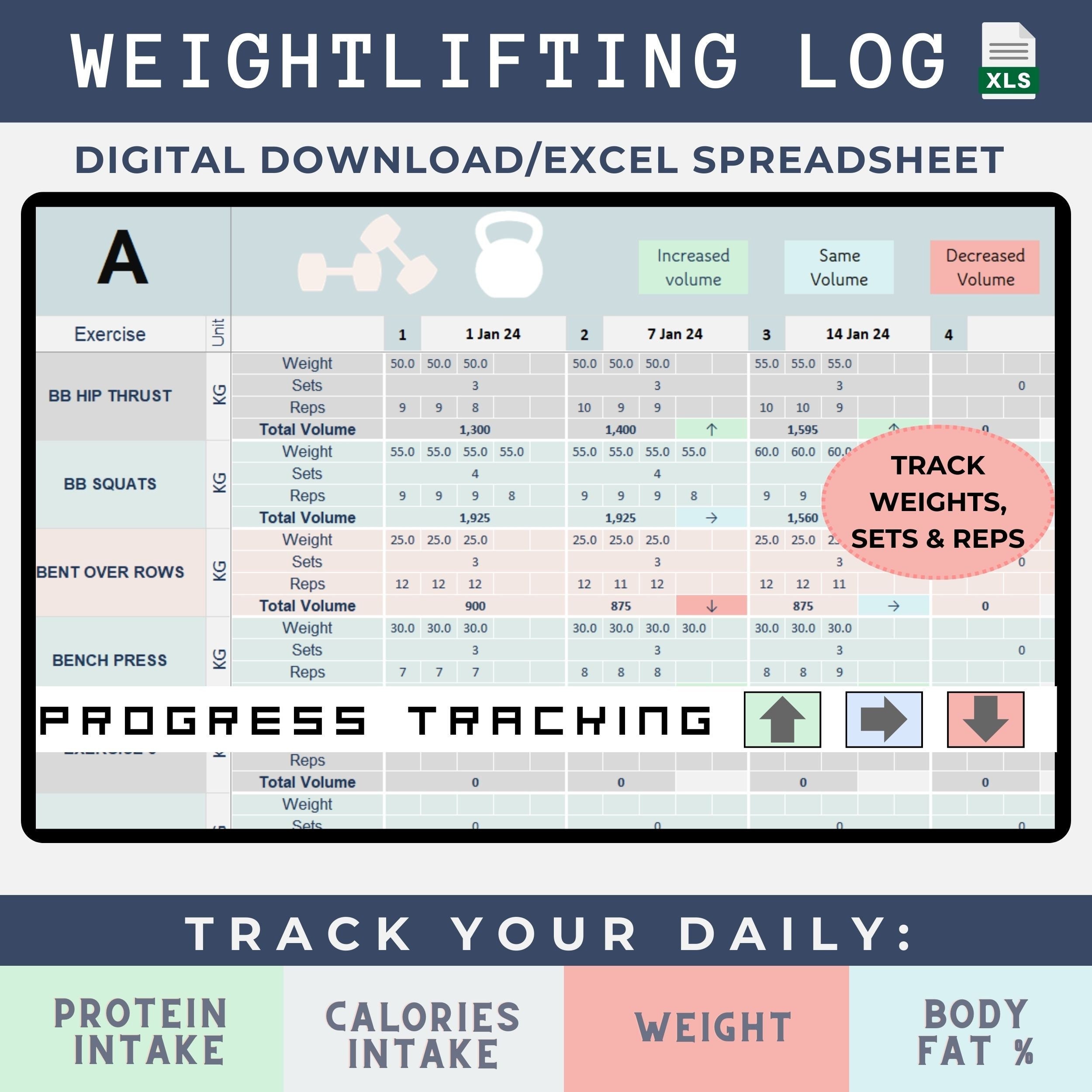
The "trackable" part is critical. You need to be able to measure your progress – whether it's weight lifted, reps completed, sets performed, or even perceived exertion. Without data, you’re just guessing. Many lifters get stuck in a rut because they aren’t diligently recording their workouts and analyzing their performance. It’s not glamorous, but it’s essential. This isn’t some new-age training fad; it's a principle rooted in physiology.
For advanced lifters, the concept is even more nuanced. Those gains don’t come as easily. We’ll explore techniques beyond simple weight increases to unlock continued progress. This guide isn’t about the basics; it’s about refining your approach to progressive overload and taking your training to the next level. We're aiming for consistent, sustainable improvements, not just chasing PRs every session.
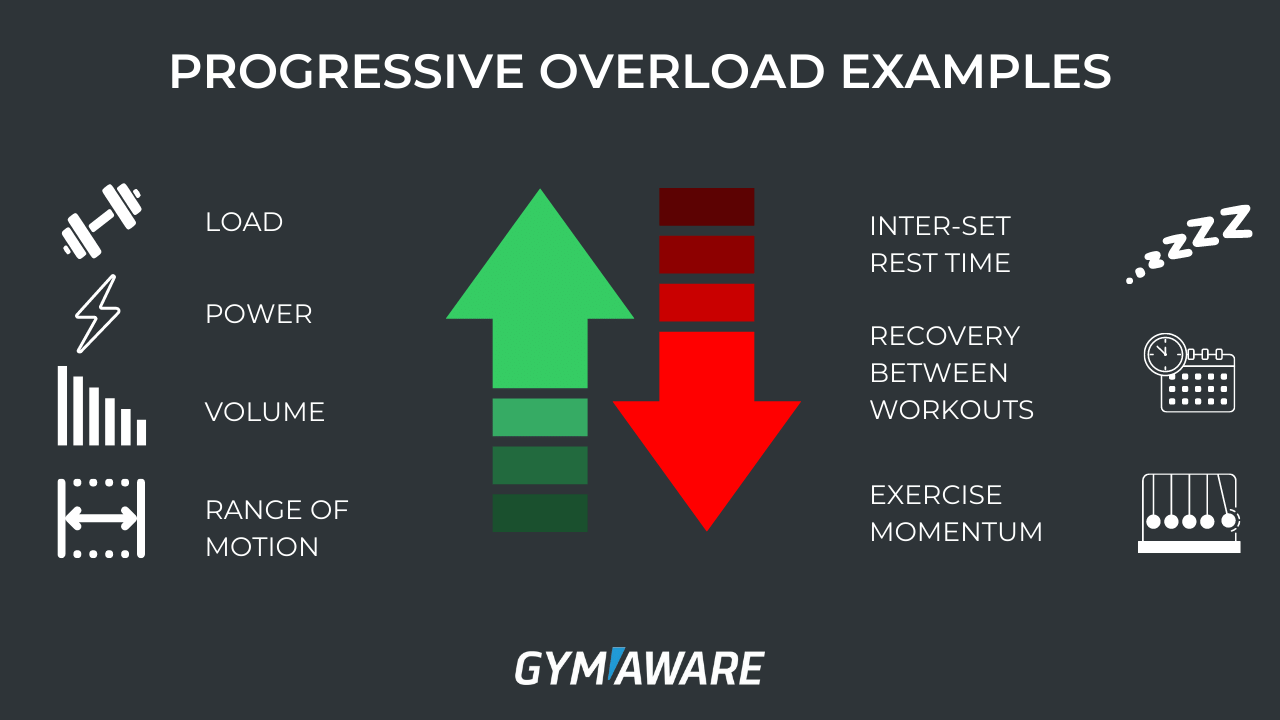
The Four Pillars of Progressive Overload: A Deep Dive
There are four primary methods for implementing progressive overload: weight increments, rep progression, volume increases, and intensity manipulation. They aren’t mutually exclusive, and in fact, they often work best in combination. Think of them as tools in your toolbox; the right tool depends on the job.
Weight increments are the most straightforward. Gradually increasing the load you lift over time is a classic approach. But it’s not always linear. There will be weeks where adding weight isn’t feasible. That’s where the other methods come into play. I’ve found microloading – adding as little as 0.5kg or 1kg per session – can be incredibly effective for breaking through plateaus, especially on upper body exercises.
Rep progression involves adding repetitions to your sets while maintaining the same weight. This is a great way to build muscular endurance and prepare for a weight increase. For example, if you’re currently performing 3 sets of 8 reps, aim for 3 sets of 9, then 3 sets of 10 before increasing the weight. I often use this when I'm feeling a bit fatigued or coming back from a minor injury.
Volume increases refer to expanding your total training volume – the total amount of work you perform. This can be achieved by adding sets, increasing reps, or both. Increasing volume is a powerful driver of hypertrophy, but it also requires careful attention to recovery. Too much volume too soon can lead to overtraining. I like to add one set per exercise per week, provided my recovery is on point.
Intensity manipulation goes beyond simply adding weight. It involves altering workout difficulty through techniques like reducing rest times, slowing down the tempo of your lifts, or incorporating isometric holds. These techniques can significantly increase the time under tension, which is a key driver of muscle growth. I've had great success with tempo training – specifically, a 3-1-2-1 tempo (3 seconds eccentric, 1 second pause, 2 seconds concentric, 1 second pause).
The interplay between these methods is crucial. Increasing reps often necessitates a weight increase down the line. Higher volume requires more recovery. Manipulating intensity can allow you to maintain weight or reps while still challenging your muscles. It’s a dynamic process, and you need to be adaptable.
Volume is King (But Needs a Kingdom): Understanding Sets, Reps, and Fatigue Management
While all four pillars are important, volume often emerges as the most potent driver of muscle growth. However, simply piling on sets isn’t a recipe for success. It’s about finding the optimal volume for you and managing the resulting fatigue. Too little volume won’t stimulate sufficient adaptation; too much will lead to overtraining and hinder progress.
Different volume schemes suit different goals. A classic 5x5 protocol is excellent for building strength, focusing on heavy weight and low reps. A 3x8-12 range is a solid choice for hypertrophy, striking a balance between weight and reps. Higher rep ranges (15-20+) can be beneficial for muscular endurance and metabolic stress. I’ve personally found a combination of these schemes to be most effective over the long term.
Calculating training volume can be a helpful way to track your progress. The formula is simple: sets x reps x weight. For example, 3 sets of 8 reps at 100kg equals a volume of 2400. Tracking this over time allows you to see if you’re consistently increasing your workload. There are apps like Fitbod and Jefit that can help with this.
But numbers only tell part of the story. Autoregulation – listening to your body – is paramount. Some days you’ll feel strong and capable of handling more volume; other days you’ll need to scale back. Don’t be afraid to adjust your plan based on how you’re feeling. Ignoring your body’s signals is a surefire way to get injured or burned out. I've learned to trust my instincts and prioritize recovery when needed.
Intensity Beyond Weight: Manipulating Density, Rest, and Tempo
We’ve discussed adding weight, but true intensity manipulation goes further than that. It’s about finding ways to make the weight feel heavier, even if the number on the plate hasn’t changed. This is where things get really interesting for advanced lifters.
Density training involves reducing your rest times between sets. This increases the metabolic stress on your muscles and challenges your cardiovascular system. Start by gradually reducing your rest times by 15-30 seconds per week. I found that reducing rest times on isolation exercises like bicep curls and lateral raises can be particularly effective.
Tempo training focuses on controlling the speed of your lifts. Slowing down the eccentric (lowering) phase of a lift increases time under tension and forces your muscles to work harder. A common tempo notation is 3-1-2-1, as mentioned earlier (3 seconds eccentric, 1 second pause, 2 seconds concentric, 1 second pause). Experiment with different tempos to find what works best for you.
Isometric holds involve holding a muscle contraction at a specific point in the range of motion. These can be incorporated into any exercise and are a great way to increase time under tension and build strength. For example, you could hold a squat at the bottom position for 5-10 seconds. I often use isometric holds at the peak of a bicep curl to really fatigue the muscle.
These techniques aren’t meant to replace traditional progressive overload; they’re meant to supplement it. They’re tools to use when you’ve hit a plateau or want to add an extra challenge to your workouts. Incorporate them strategically, not randomly.
Periodization and Progressive Overload: Planning for Long-Term Gains
Progressive overload isn’t a linear process. You can’t just keep adding weight or volume indefinitely. Eventually, you’ll hit a point where your body needs a break. That’s where periodization comes in. Periodization is the systematic planning of training cycles to optimize performance and prevent overtraining.
There are several different periodization models. Linear periodization involves gradually increasing intensity and decreasing volume over time. Undulating periodization involves varying intensity and volume on a more frequent basis (e.g., weekly or even daily). Block periodization involves focusing on specific training goals (e.g., strength, hypertrophy, power) in distinct blocks of time. I’ve found block periodization to be the most effective for long-term progress.
A well-structured periodization plan will include deload weeks – periods of reduced training volume and intensity. These are essential for allowing your body to recover and adapt. Deloads aren’t about being lazy; they’re about strategically managing fatigue and preventing burnout. I typically schedule a deload week every 4-6 weeks.
Planning your periodization cycles allows you to proactively manage progressive overload. Instead of reacting to plateaus, you can anticipate them and adjust your training accordingly. It’s about thinking long-term and building a sustainable training program. Tracking your progress and analyzing your results is crucial for refining your periodization plan over time.
For example, a block periodization scheme might look like this: 4 weeks of hypertrophy-focused training (moderate weight, higher reps), followed by 4 weeks of strength-focused training (heavy weight, lower reps), followed by a deload week. This cycle can then be repeated, with adjustments made based on your progress.
Progressive Overload: A Comparison of Periodization Models - 2024
| Periodization Model | Description | Best For | Complexity | Recovery Demands |
|---|---|---|---|---|
| Linear Periodization | Involves a systematic, progressive increase in intensity (weight) and a decrease in volume (sets/reps) over time. Typically progresses from high volume/low intensity to low volume/high intensity. | Strength, initial hypertrophy phases | Low | Moderate - allows for predictable recovery. |
| Undulating Periodization (Daily/Weekly) | Features frequent (daily or weekly) fluctuations in intensity and volume. Can involve varying rep ranges and exercise selection throughout the week. Two main types: Daily Undulating Periodization (DUP) and Weekly Undulating Periodization (WUP). | Balanced development - strength, hypertrophy, and some endurance | Moderate | High - requires careful monitoring of fatigue and adaptation. |
| Block Periodization | Divides training into distinct blocks, each with a specific focus (e.g., accumulation, transmutation, realization). Accumulation focuses on volume, transmutation on intensity/power, and realization on peaking for competition. | Peaking for competition, advanced strength athletes | High | Very High - requires extensive planning and understanding of training adaptations. |
| Double Progression | Focuses on increasing reps within a set range before increasing weight. For example, performing 3 sets of 8-12 reps, and increasing weight once 12 reps can be achieved in all sets. | Hypertrophy, building work capacity | Low-Moderate | Moderate - allows for gradual adaptation and reduced risk of overtraining. |
| Reverse Linear Periodization | Starts with high intensity and low volume, then gradually decreases intensity and increases volume. Often used after a peaking phase or to manage accumulated fatigue. | Deloading, recovery, transitioning to hypertrophy phases | Moderate | Low - designed to prioritize recovery. |
| Coneundrum Periodization | Combines elements of linear and undulating periodization, often incorporating a weekly undulating structure within a larger linear progression. Allows for flexibility and individualization. | Intermediate to advanced lifters, those needing varied stimulus | Moderate-High | Moderate-High - requires careful adjustment based on individual response. |
Data sourced from AI research — verify before making decisions
Plateau Busting: When Progressive Overload Stalls and What to Do
Plateaus are inevitable. No matter how well-planned your training is, you’ll eventually hit a point where progress stalls. It’s frustrating, but it’s a normal part of the process. The key is to identify the cause of the plateau and implement strategies to break through it.
Common reasons for plateaus include insufficient recovery, improper form, lack of variation, and inadequate nutrition. Really assess your recovery. Are you getting enough sleep? Are you managing stress effectively? Are you eating enough protein? These are all crucial factors.
Changing exercises can be a surprisingly effective way to break through a plateau. Your muscles adapt to specific movements, so introducing new variations can challenge them in different ways. Switching from barbell squats to front squats, or from bench press to incline dumbbell press, can provide a new stimulus.
Adjusting training frequency is another option. You might benefit from increasing or decreasing the number of times you train a particular muscle group per week. Revisit your intensity techniques. Experiment with different tempos, rest times, and isometric holds. I once hit a plateau on my deadlift and broke through it by incorporating pause reps – pausing at the sticking point during the lift.
Don’t get discouraged. Plateaus are a sign that your body has adapted to your current training stimulus and needs a new challenge. View them as opportunities to learn and refine your approach. Remember that consistency and patience are key.
- Assess your recovery
- Check your form
- Introduce exercise variation
- Adjust training frequency
- Experiment with intensity techniques
The Role of Nutrition and Recovery in Maximizing Progressive Overload
Progressive overload isn’t just about what you do in the gym; it’s also about what you do outside of it. Proper nutrition and adequate recovery are essential for supporting muscle growth and adaptation. You can’t out-train a bad diet or a lack of sleep.
Protein intake is particularly important. Aim for at least 1.6-2.2 grams of protein per kilogram of body weight per day. This provides the building blocks for muscle repair and growth. A calorie surplus is also necessary for building muscle, but it should be a moderate surplus – around 250-500 calories per day.
Sleep is when your body does most of its repair work. Aim for 7-9 hours of quality sleep per night. Stress management is also crucial. Chronic stress can elevate cortisol levels, which can hinder muscle growth and promote fat storage. Find healthy ways to manage stress, such as meditation, yoga, or spending time in nature.
Think of nutrition and recovery as the foundation upon which your training is built. If the foundation is weak, the structure will eventually crumble. Prioritize these aspects of your lifestyle, and you’ll be well on your way to achieving your fitness goals. They aren’t optional extras; they’re integral to the process.
Putting It All Together: A Sample Progressive Overload Plan for Intermediate Lifters
Here's a sample 4-week progressive overload plan for an intermediate lifter focused on strength gains, using the bench press as an example. This assumes a starting weight where you can comfortably perform 3 sets of 5 reps. Remember to warm up properly before each workout.
Week 1: 3 sets of 5 reps at 70kg. Focus on perfect form. Week 2: 3 sets of 6 reps at 70kg. Week 3: 3 sets of 5 reps at 72.5kg. Week 4: Deload – 2 sets of 5 reps at 60% of your working weight (approximately 43.5kg).
This is a simple linear progression scheme. Adjust the weight and reps based on your individual strength level. Don’t be afraid to experiment and find what works best for you. This is a starting point, not a rigid prescription. Remember to track your progress and make adjustments as needed. The key is to consistently challenge yourself and strive for improvement.


No comments yet. Be the first to share your thoughts!