

Tempo training
Tempo training means controlling the speed of each part of a lift. You aren't just moving slowly for the sake of it; you're removing momentum. This increases time under tension, which builds muscle faster and forces your stabilizing muscles to actually do their job.
Why is this effective? When you lift with momentum, you’re relying less on your muscles and more on physics. By controlling the tempo, you eliminate momentum and force your muscles to do the work. This leads to greater muscle fiber recruitment and improved muscle control. It can also help address muscle imbalances, as you're forced to consciously engage weaker muscle groups. Think about it – a fast, uncontrolled descent allows gravity to do a lot of the work; a slow, controlled descent forces your quads and glutes to work overtime.
Implementing tempo training involves using a four-digit code to represent the duration of each phase of the lift: eccentric (lowering), isometric (pause), concentric (lifting), and isometric (pause). For example, a 3-1-X-1 tempo for squats means a 3-second eccentric phase, a 1-second pause at the bottom, an explosive concentric phase (X signifies as fast as possible with good form), and a 1-second pause at the top. Experiment with different tempos to find what works best for you, but start with controlled movements and prioritize good form. Don’t be afraid to start slower than you think you should.
Pause reps
Pause reps are a deceptively simple but incredibly effective technique. They involve pausing at a specific point during the lift – typically the most challenging part – to build strength and address sticking points. This pause eliminates momentum and forces you to generate the necessary force to overcome that sticking point. It's a fantastic way to build isometric strength, which is crucial for stabilizing joints and controlling movement.
Strategically placing pauses is key. For squats, a pause at the bottom forces you to maintain proper form and build strength in the hole. For bench press, a pause mid-range targets the weakest part of the lift. The pause should be long enough to eliminate momentum, typically 2-3 seconds. However, don’t sacrifice form to hold the pause; if you can’t maintain proper technique, reduce the weight.
A common mistake with pause reps is losing form during the pause. Maintain a tight core, keep your back straight, and avoid letting your body collapse. These aren’t just about making the exercise harder; they’re about making it better. They’re about identifying your weaknesses and systematically addressing them to build a more well-rounded and resilient physique.
Unilateral work
Unilateral exercises – exercises performed on one side of the body at a time, like single-leg squats, dumbbell lunges, and single-arm rows – are essential for correcting muscle imbalances, improving stability, and preventing injuries. Most people have some degree of asymmetry, meaning one side is slightly stronger or more mobile than the other. This can be due to a variety of factors, including genetics, lifestyle, and dominant side preference.
Why do imbalances happen? We naturally favor our dominant side, leading to greater muscle development and neurological efficiency on that side. This can create a compensatory pattern where the weaker side has to work harder to maintain balance and stability. Over time, this can lead to pain, dysfunction, and an increased risk of injury. Unilateral work forces each side to work independently, highlighting and addressing these imbalances.
You can assess for imbalances with simple movement screens, like observing your posture during a squat or comparing the range of motion in your shoulders. Incorporating unilateral exercises into your routine helps to strengthen the weaker side, improve stability, and promote more balanced movement patterns. Don’t be surprised if you feel more challenged on one side than the other – that’s the point!
Isometric holds
Isometric holds involve contracting your muscles without changing their length. Think of holding a plank or a wall sit. They’re a fantastic way to build strength, improve joint stability, and enhance body awareness. While they don't involve dynamic movement, they are incredibly effective for building strength at specific angles.
There are different types of isometric holds. Overcoming isometrics involve pushing against an immovable object, like trying to push a wall. Yielding isometrics involve resisting a force, like slowly lowering a weight and holding it in a fixed position. Both types are valuable for building strength and control. Isometric exercises can be incorporated into almost any workout, simply by holding a position for a set amount of time.
Isometrics are useful if you have joint pain because they build strength without the wear and tear of constant movement. I'm not a physical therapist, so if you're actually injured, check with a pro before trying to rehab yourself with these.
Cluster sets
Cluster sets are a technique for increasing training volume without significantly increasing fatigue. They involve breaking up a set into smaller clusters with short rest periods between each cluster. For example, instead of performing 10 consecutive reps of bench press, you might perform 2 reps, rest for 15 seconds, perform 2 more reps, and repeat this pattern until you’ve completed 10 reps.
The benefits are numerous. You can handle heavier weights for more total reps, leading to greater muscle growth and strength gains. The short rest periods allow you to recover enough to maintain good form throughout the set, reducing the risk of injury. It’s also a great way to push past plateaus and overcome sticking points. This isn't a shortcut to avoid hard work; it’s a smart way to manage fatigue and maximize output.
Determining appropriate rest periods between clusters is crucial. Shorter rest periods (10-15 seconds) will increase the metabolic stress, while longer rest periods (30-60 seconds) will allow for more complete recovery. Experiment to find what works best for you. Start with shorter rest periods and gradually increase them as needed. Focus on maintaining good form throughout each cluster.
Sample programs
Now that you understand these techniques, let's look at how to incorporate them into a beginner weightlifting program. Here are three sample programs, tailored to different goals. Remember, these are just examples and should be adjusted based on your individual needs and goals. It’s important to listen to your body and adjust the intensity and volume accordingly.
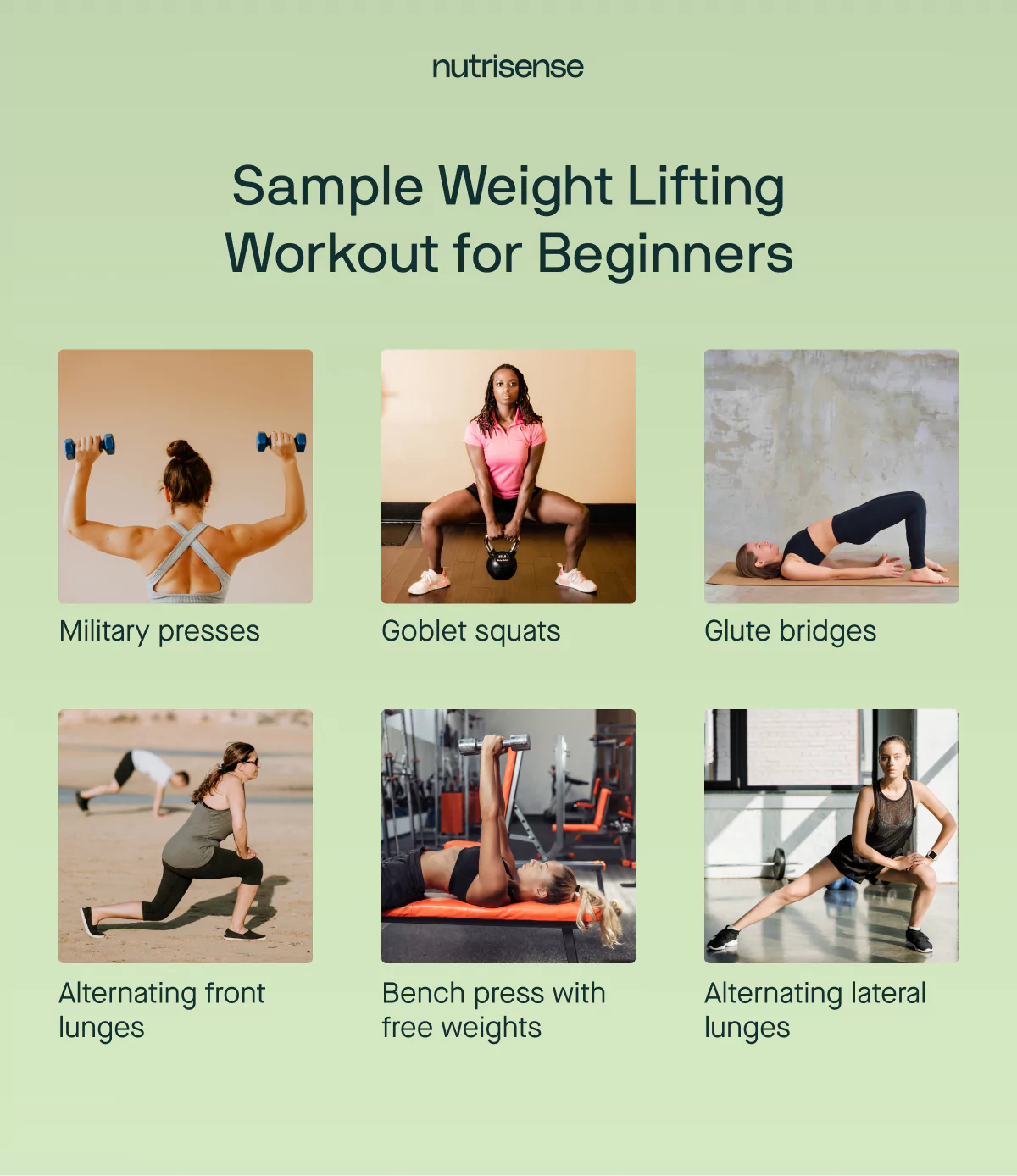
Program 1: General Strength (3 days/week): Monday – Squats (3 sets of 8-12 reps with 3-1-X-1 tempo), Bench Press (3 sets of 8-12 reps with pause reps at mid-range), Rows (3 sets of 8-12 reps per side). Wednesday – Deadlifts (1 set of 5, 1 set of 3, 1 set of 1 with overcoming isometric hold at the top), Overhead Press (3 sets of 8-12 reps), Pull-ups (3 sets to failure). Friday – Lunges (3 sets of 10-12 reps per leg), Push-ups (3 sets to failure), Plank (3 sets, hold for as long as possible).
Program 2: Muscle Building (4 days/week): Monday – Chest & Triceps (focus on tempo training and cluster sets), Tuesday – Back & Biceps (focus on unilateral work and pause reps), Thursday – Legs & Shoulders (focus on isometric holds and controlled movements), Friday – Full Body (circuit training with a mix of all techniques).
Program 3: Athletic Performance (3 days/week): This program emphasizes explosive movements and incorporates plyometrics alongside the techniques discussed. Focus on power development and functional strength. Remember to prioritize proper form and technique over lifting heavy weights. It is crucial to consult with a qualified healthcare professional before starting any new exercise program. They can help you assess your fitness level and develop a program that is safe and effective for you.
5 Game-Changing Weightlifting Techniques for Beginners
| Technique | Primary Benefit | Difficulty | Best For |
|---|---|---|---|
| Bracing | Increased core stability and spinal support during lifts | Beginner | Strength, Rehab |
| Proper Breathing | Enhanced intra-abdominal pressure and oxygen delivery to muscles | Beginner | Strength, Hypertrophy, Endurance |
| Controlled Eccentric Phase | Improved muscle control, strength gains, and reduced injury risk | Intermediate | Strength, Hypertrophy |
| Full Range of Motion (ROM) | Maximizes muscle fiber recruitment and flexibility | Intermediate | Hypertrophy, Endurance |
| Tempo Training | Increased time under tension, promoting muscle growth and control | Intermediate | Hypertrophy, Endurance |
| Scapular Retraction | Improved shoulder stability and posture, crucial for upper body lifts | Beginner | Strength, Rehab |
Illustrative comparison based on the article research brief. Verify current pricing, limits, and product details in the official docs before relying on it.
No comments yet. Be the first to share your thoughts!