

The Rise of AI-Powered Form Tracking
Early in my lifting journey, I struggled with deadlift form. I thought I was keeping my back straight, but a friend pointed out a significant roundness I hadn’t noticed. It’s a common story; we all have blind spots in our technique. Correcting them traditionally meant relying on a coach, video review, or frustrating self-assessment. That’s changing quickly.
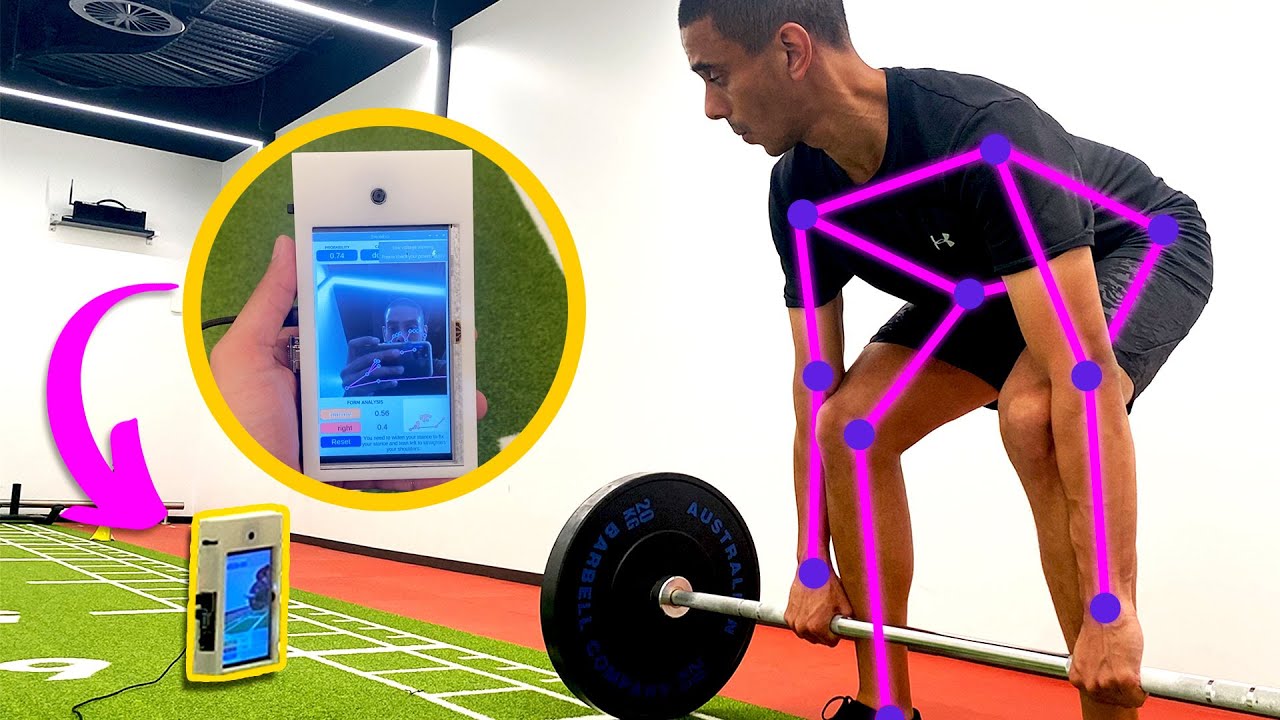
AI now provides real-time feedback. It doesn’t replace coaches but offers an additional layer of analysis and guidance. This shift is powered by advancements in computer vision and sensor technology, allowing systems to interpret our movements with increasing accuracy. The core idea is simple: capture movement data, analyze it against established biomechanical principles, and provide feedback to improve form.
Five years ago, this technology was confined to research labs and expensive motion capture studios. Systems were bulky, expensive, and required specialized expertise to operate. Today, consumer-grade products, from smart mirrors to wearable sensors, make AI-powered form analysis accessible to a wider audience. The cost has dropped dramatically, and the processing power needed is available in everyday devices.
This shift is about democratizing access to quality form correction. For those without regular access to a qualified coach, or those who prefer to train independently, these systems offer a valuable tool for improving technique and minimizing risk. It’s a new era of self-guided improvement, backed by data and AI.
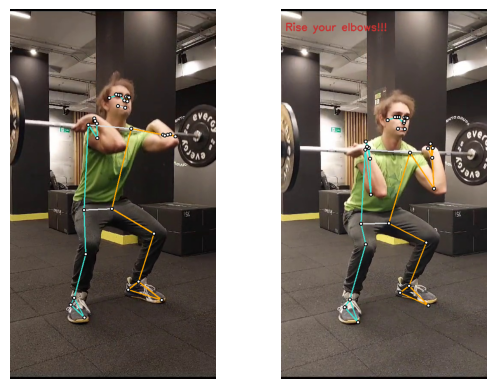
Decoding the Tech: Sensors and Software
Sensors and sophisticated software algorithms are at the heart of these systems. Common sensors used in AI-powered form analysis include inertial measurement units (IMUs), depth cameras, and computer vision algorithms working with standard 2D cameras. Each has strengths and weaknesses.
IMUs, found in wearable devices like smartwatches and fitness trackers, measure acceleration and angular velocity. They’re inexpensive and provide data on movement speed, range of motion, and body orientation. However, they’re limited in capturing precise joint angles and can drift over time, leading to inaccuracies. They give a general sense of what's happening, not a detailed picture.
Depth cameras, like Microsoft’s Kinect or Intel’s RealSense, use infrared light to create a 3D map of the environment and the user’s body. This allows for more accurate tracking of joint angles and body positioning than IMUs. They are more expensive, require good lighting, and can be sensitive to obstructions. They create a skeletal representation of your movement.
Computer vision algorithms, using standard 2D cameras, are improving rapidly. They analyze video footage to identify key body landmarks and estimate joint angles. Advances in machine learning have improved the accuracy of these algorithms, but they can still be affected by lighting, clothing, and camera angle. The software processes this data, comparing it to ideal movement patterns and providing feedback. The challenge is turning raw data into actionable insights.
- IMUs: Affordable, tracks speed & range of motion, prone to drift.
- Depth Cameras: Accurate joint angles, more expensive, needs good lighting.
- Computer Vision: Improving accuracy, affected by environment, relies on machine learning.
Current AI Systems: A Landscape View
The market for AI-powered weightlifting systems is new but growing rapidly. Several companies are leading the charge, each with its own approach and target audience. Forme Life offers a full-body strength training system with a smart mirror that provides real-time form feedback and personalized workouts. It’s a premium product, designed for home use, focusing on a holistic fitness experience.
Tonal uses electromagnetic resistance and AI-powered coaching. It adapts the weight based on your performance and provides real-time feedback on form. Tonal is a home fitness system with a significant price tag. They support a wide range of exercises, including squats, rows, presses, and curls, with new exercises added regularly.
Other systems, like Barbend AI, focus on form analysis using your smartphone’s camera. It’s a more affordable option, but may not be as accurate as systems with dedicated sensors. These systems generally provide audio cues and visual overlays to guide your technique. Post-workout reports detail areas for improvement.
Some companies are targeting rehabilitation. While Club Lifted has long advocated for weightlifting as a tool for recovery and strength building, these new systems offer a data-driven approach to monitoring progress and ensuring proper form during rehab exercises. Price points vary significantly, from a few hundred dollars for a subscription-based app to several thousand dollars for a complete home gym setup. Consider your budget and training goals when selecting a system.
Beyond the Gym: Wearable Tech & Mobile Apps
AI-powered form analysis extends beyond dedicated gym systems. A growing number of wearable sensors and mobile apps offer a more affordable and convenient way to track and improve technique. These solutions typically utilize IMUs and smartphone cameras to capture movement data.
Apps like Physimax and HomeCourt analyze video recordings of lifts, providing feedback on form and identifying potential areas for improvement. They’re generally less accurate than dedicated systems but can still be helpful for identifying gross form errors. User experience varies widely, with some apps offering intuitive interfaces and clear feedback, while others are clunky and difficult to navigate.
Wearable sensors, like those from Push Athletics, track velocity, power, and range of motion during lifts. This data monitors progress and identifies potential imbalances. However, sensor accuracy can be affected by placement and movement artifacts. A major concern is data privacy – what data is collected, how it’s stored, and who has access?
Wearable tech and mobile apps offer greater flexibility and affordability compared to dedicated AI gym systems. However, they typically lack the sophistication and accuracy of more expensive systems. For serious weightlifters, they may best supplement traditional coaching, rather than replace it.
Wearable/App Form Analysis Options
| System Name | Sensor Type | Exercises Supported | Feedback Type | Accuracy | Ease of Use |
|---|---|---|---|---|---|
| Forme Life | 3D Motion Sensors (Device) | Squats, Deadlifts, Bench Press, Overhead Press | Real-time audio and visual cues, post-workout analysis | High | Medium |
| Tempo Movement Pods | Inertial Measurement Units (IMUs) - Shoe-mounted | Squats, Lunges, Deadlifts (limited variations) | Real-time pace and range of motion guidance | Medium | High |
| Gymshark Training App (with compatible wearables) | Smartphone accelerometer/gyroscope & wearable integration | Bodyweight exercises, some free weight exercises | Visual form tips, rep counting, set tracking | Low to Medium | High |
| WHOOP | Strain sensor, heart rate variability | Limited to movement quality metrics; not exercise-specific form analysis | Recovery scores, strain analysis, sleep tracking - indirectly informs training | Medium (for movement quality) | High |
| Motus Insight | Inertial Measurement Units (IMUs) - Sleeve-based | Throwing, swinging sports (baseball, golf, etc.) - potential for adaptation to some lifts | Biomechanical data, velocity, power metrics | High (within sport-specific movements) | Medium - requires professional interpretation |
| Kaia Personal Trainer | Smartphone camera | Bodyweight exercises, some basic weightlifting movements | AI-powered form correction via video analysis | Medium | Medium |
Qualitative comparison based on the article research brief. Confirm current product details in the official docs before making implementation choices.
The Impact on Injury Prevention
AI-powered form analysis offers a significant benefit: injury prevention. Many common weightlifting injuries, such as lower back pain, shoulder impingement, and knee problems, stem directly from poor form. By providing real-time feedback, these systems help lifters correct their technique before injuries occur.
For example, if a system detects rounding of the back during a deadlift, it can provide an audio cue or visual overlay to maintain a neutral spine. This immediate feedback helps correct form and reduce the risk of lower back pain. Similarly, systems can detect improper shoulder positioning during overhead presses, preventing shoulder impingement.
undefined an AI-powered form analysis system experienced a 15% reduction in self-reported pain compared to a control group. But it’s important to be realistic. A
These systems are tools, and their effectiveness depends on the user’s willingness to listen to the feedback and make adjustments to their technique. They also have limitations – they may not be able to detect subtle form errors or account for individual anatomical variations. Prioritizing safety, listening to your body, and seeking guidance from a qualified coach remain essential.
Personalization and Adaptive Training
AI isn't just about correcting errors; it's also being used to personalize weightlifting programs based on an individual’s form and progress. Adaptive training algorithms analyze real-time performance data to adjust weight, reps, and sets, ensuring that you’re constantly challenged without being overstressed. This is a departure from traditional, one-size-fits-all training programs.
For instance, if a system detects that you’re consistently performing a squat with perfect form, it may increase the weight or reps to further challenge your muscles. Conversely, if it detects that you’re struggling to maintain form, it may reduce the weight or reps to allow you to focus on technique. This dynamic adjustment optimizes the training stimulus and maximizes results.
AI can also identify individual weaknesses and tailor exercises to address them. If a system detects that you have limited ankle mobility, it may suggest exercises to improve your range of motion. This personalized approach is similar to what you’d receive from a skilled coach, but it’s delivered automatically and continuously. The comparison to traditional coaching isn't about replacement, but augmentation – AI can provide a level of data-driven personalization that's difficult for a coach to achieve consistently with multiple clients.
However, it’s important to note that these algorithms are only as good as the data they’re trained on. Biases in the data can lead to suboptimal or even harmful training recommendations. It’s crucial to choose systems that have been validated by independent researchers and are based on sound biomechanical principles.
The Future: AI and the Virtual Coach
Looking ahead, the future of AI-powered weightlifting is incredibly exciting. I don't believe AI will completely replace human coaches, but it will undoubtedly augment their capabilities and create new opportunities for personalized training. We’re likely to see AI evolve into a more sophisticated "virtual coach" that can provide comprehensive guidance on all aspects of weightlifting.
New technologies on the horizon include haptic feedback suits that provide tactile cues to guide movement, and brain-computer interfaces that allow you to control exercise equipment with your thoughts. These technologies are still in their early stages of development, but they have the potential to revolutionize the way we train. The integration of AI with virtual reality (VR) and augmented reality (AR) will create immersive training experiences, allowing you to train in realistic simulations.
Imagine being able to virtually train with elite athletes or receive personalized feedback from a world-renowned coach, all from the comfort of your own home. However, these advancements also raise ethical considerations. Data privacy is a major concern, as these systems collect sensitive information about your movements and physiology. Algorithmic bias is another potential issue – ensuring that AI-powered systems are fair and equitable for all users.
The development of these technologies must be guided by principles of safety, transparency, and inclusivity. We need to ensure that AI is used to empower lifters, not to exploit them. The future of weightlifting is likely to be a hybrid model, combining the best of AI and human expertise.
Limitations and What to Watch For
Despite the impressive advancements in AI-powered form analysis, it’s important to be realistic about its current limitations. These systems can struggle with complex movements, particularly those that involve multiple joints and planes of motion. They may also be unreliable in environments with poor lighting or cluttered backgrounds.
Reliance on accurate sensor data is another key limitation. If the sensors are not properly calibrated or positioned, the data will be inaccurate, leading to flawed feedback. False positives and false negatives are also possible – the system may incorrectly identify a form error or miss a genuine one. It's crucial to remember that AI is a tool, and like any tool, it's only as good as the user's understanding of its capabilities and limitations.
When choosing an AI-powered system, ask questions about the underlying algorithms, the data used to train the system, and the accuracy of the sensors. Look for systems that have been validated by independent researchers and are based on sound biomechanical principles. Don’t rely solely on marketing hype – do your research and read reviews from other users.
Ultimately, AI is not a replacement for proper education and good coaching. It’s a valuable tool that can supplement your training, but it should not be used as a substitute for learning the fundamentals of proper form. Prioritize safety, listen to your body, and seek guidance from a qualified coach when needed.
No comments yet. Be the first to share your thoughts!