

Beyond straps and chalk
Weightlifting gear hasn't changed much since your dad's era. Leather belts and chalk work, but they don't tell you anything. By 2026, the gear we wear is finally starting to talk back, turning passive support into active data.
The core of this change is the rapid advancement in sensor technology and data analysis. We're moving beyond simply feeling whether a lift was good or bad. These new accessories measure it. This isn’t about replacing traditional gear, it’s about augmenting it with a layer of objective data. Traditional tracking relies heavily on rep counts and estimated one-rep maxes, leaving a lot to guesswork. Wearables aim to eliminate that guesswork with precise, real-time feedback.
Historically, improving technique meant relying on a coach’s eye or video analysis after the set. That’s still valuable, but smart accessories offer an immediate feedback loop. They can flag form deviations during the lift, helping you correct them before bad habits solidify. This constant stream of data allows for a level of personalization previously unattainable. It’s about optimizing not just how much you lift, but how you lift it.
Fixing your form with sensors
At the heart of these smart accessories are sensors, primarily inertial measurement units, or IMUs. These small but powerful devices detect and measure acceleration, angular velocity, and orientation. Essentially, they’re tracking the precise movement patterns of your body during a lift. This data is then processed by algorithms to identify deviations from optimal form. It's a significant leap from relying on subjective assessment.
The real magic happens when this data translates into actionable feedback. Companies like Kinetiq are developing sensors that provide real-time cues. This can take the form of audible signals—a beep when your elbows drop during a bench press, for instance—or haptic vibrations that subtly guide your movement. Repcount.com offers a different approach, using visual displays to show your range of motion and identify areas for improvement. The goal is to create a feedback loop that reinforces correct technique.
Accuracy is, understandably, a major challenge. Early form-tracking devices weren’t always precise, leading to false positives and frustrating experiences. However, algorithms are constantly improving. Machine learning is playing a huge role, allowing systems to learn from vast datasets of correct and incorrect lifts. We’re seeing systems that can now differentiate between subtle form errors with increasing reliability. But it’s still not perfect, and relying solely on the tech isn’t advisable; a good coach remains invaluable.
Why bar speed is better than rep counts
For years, we’ve focused on the weight on the bar. That’s important, of course, but it’s only part of the equation. Smart barbells, like those offered by RepForce, and clip-on sensors are now capable of measuring actual weight lifted and the velocity of each rep. This unlocks a whole new layer of training insight. Velocity is a crucial indicator of intent and fatigue.
Why does velocity matter? It’s directly linked to power output – the rate at which you’re performing work. A slower lift, even at the same weight, indicates fatigue or a lack of explosive power. Tracking velocity allows you to optimize training for specific goals. If you're aiming for strength, you might focus on maintaining a certain velocity threshold with heavier loads. For power development, you’ll prioritize maximizing velocity with moderate weights.
This data also enables auto-regulation of training volume. If your velocity drops significantly during a set, it’s a sign you’re approaching failure. A smart system can then adjust the weight or reps accordingly, preventing overtraining and maximizing gains. This is a move away from pre-programmed routines and towards a more responsive, individualized approach to strength training.
Muscle Load & Imbalance Detection
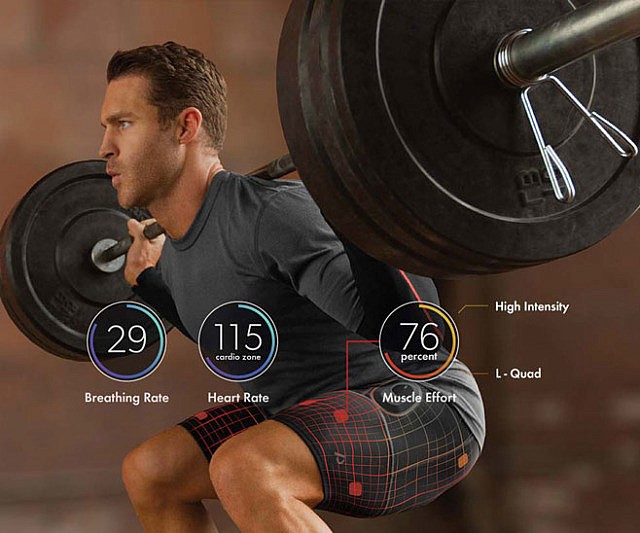
Emerging technologies are pushing the boundaries even further, attempting to measure muscle activation and load distribution. This is where electromyography, or EMG, comes into play. EMG sensors detect the electrical activity produced by your muscles when they contract. By strategically placing these sensors, it’s possible to get a sense of which muscles are working hardest during a lift.
What can this data reveal? Primarily, it can highlight muscular imbalances. If one side of your body is consistently activating more muscle fibers than the other, it could indicate a weakness or an increased risk of injury. Companies are exploring surface EMG technology, which offers a non-invasive way to monitor muscle activity. This is a complex area of research, and the technology is still relatively new.
I'm skeptical about current muscle load tech. Surface EMG is finicky—sweat or a slightly misplaced sensor ruins the reading. Unless you have a sports science degree, the raw data is mostly noise right now. It's a cool concept for injury prevention, but we aren't there yet.
Wearable Ecosystems: Connecting the Dots
The true power of these smart accessories isn’t just in the data they collect, but in how that data integrates with the broader fitness ecosystem. Increasingly, these devices are designed to be compatible with smartwatches, fitness apps like Apple Health and Google Fit, and dedicated training platforms like Trainerize. This allows for a holistic view of your training and recovery.
Compatibility hinges on open APIs – application programming interfaces – which allow different software systems to communicate with each other. The more open the API, the easier it is to share data between devices and platforms. This interoperability is crucial for creating a seamless training experience. You should be able to track your lifts with a smart barbell, have that data automatically synced to your favorite fitness app, and then use that information to adjust your training plan.
However, data privacy is a legitimate concern. Sharing your training data with third-party apps raises questions about security and potential misuse. It’s essential to understand the privacy policies of the apps and devices you’re using and to ensure that your data is protected.
The problem with too much data
You’ve got all this data – velocity, power output, muscle activation, form metrics – but what do you actually do with it? Simply presenting users with a raw stream of numbers is overwhelming and unhelpful. The key is data visualization and actionable insights. Are apps providing clear, concise recommendations based on your performance? Or are they just dumping data on you?
This is where artificial intelligence and machine learning come into play. AI algorithms can analyze your training data to identify patterns, predict performance, and personalize training plans. A truly smart system should be able to tell you, for example, that you’re consistently losing velocity on your last few reps, suggesting you need to reduce the weight or adjust your technique. It should also be able to recognize signs of overtraining and recommend a deload week.
Lifters will need to develop new skills to interpret this data effectively. Understanding basic statistics, learning to identify trends, and being able to critically evaluate the recommendations of AI-powered systems will be essential. It’s not enough to just lift the weight; you need to understand why you’re lifting it and how to optimize your training based on objective feedback.
Tracked Performance Metrics
- Velocity - Measures the speed of each repetition. Higher velocity (within proper form) often indicates power development, while decreasing velocity during a set can signal fatigue and the need to adjust weight or reps.
- Power Output - Calculated from force and velocity, power output (measured in Watts) reveals how effectively you're generating force. Tracking this helps optimize training for strength *and* speed, crucial for athletic performance.
- Range of Motion (ROM) - Accurate sensors can now track joint angles during lifts. Consistent ROM ensures proper form and maximizes muscle activation. Deviations can indicate imbalances or potential injury risks.
- Repetition Quality - Some systems analyze movement patterns to assess form and provide real-time feedback. This includes detecting depth in squats, stability during overhead presses, and minimizing unwanted movement.
- Muscle Activation (EMG) - Electromyography (EMG) sensors, often integrated into sleeves or suits, measure electrical activity produced by muscles. This provides insight into which muscles are contributing to the lift and helps identify weaknesses.
- Load Profile - Beyond just the weight lifted, this metric tracks variations in force throughout the lift. It can reveal sticking points where you struggle, allowing for targeted training to overcome those weaknesses.
- Recovery Metrics (HRV/Sleep) - While not directly *during* a lift, integration with heart rate variability (HRV) trackers like Whoop or sleep data from Oura Ring provides context for performance. Poor recovery impacts strength and increases injury risk.
No comments yet. Be the first to share your thoughts!