

Moving beyond the scale
For decades, weightlifting progress has been largely measured by what you can lift, how many reps you can grind out, and the sets you complete. It’s a simple system, and it works to a point. But it's a limited view, often ignoring the complex physiological signals your body is sending. Relying solely on these numbers can lead to plateaus, overtraining, and even injury.
The truth is, strength training isn’t just about moving weight; it’s about how your nervous system and muscles adapt to that stress. This is where biometric data comes in. Metrics like heart rate variability, muscle oxygenation, and movement velocity offer a more nuanced understanding of your body’s response to training, providing insights that traditional measures simply can’t.
Biometric data isn't about chasing vanity metrics; it’s about optimizing your training for sustainable gains and minimizing risk. It allows you to move beyond simply doing the work and start understanding how your body is responding to it. What was once the domain of elite athletes and research labs is now becoming increasingly accessible to anyone serious about their strength training.
This shift isn’t just about tracking more data points. It’s about shifting from a reactive approach – waiting for pain or burnout to signal a problem – to a proactive one, where you anticipate and address issues before they arise. It’s about becoming a more informed, self-aware lifter.
Tracking nervous system recovery
Heart Rate Variability, or HRV, is often described as the variation in time between successive heartbeats. But it’s far more than just that. HRV is a powerful indicator of your autonomic nervous system’s function—specifically, the balance between your sympathetic (“fight or flight”) and parasympathetic (“rest and digest”) branches. A higher HRV generally indicates greater resilience and adaptability.
I use HRV to spot overtraining before I actually feel burnt out. If your score stays low for three days, you're likely stuck in a 'fight or flight' state and need a deload. When it's high, that's the day to go for a PR.
Key metrics to understand include RMSSD (Root Mean Square of Successive Differences) and SDNN (Standard Deviation of Normal to Normal intervals). RMSSD is particularly sensitive to short-term changes in HRV and is a good indicator of parasympathetic activity. SDNN reflects long-term HRV and overall autonomic balance. Don't get bogged down in the math, though; most HRV tracking apps will provide you with a simplified score.
The best time to measure HRV for weightlifting is first thing in the morning, before you get out of bed. This minimizes the influence of daily stressors. Should you adjust your workout based on a low HRV score? Absolutely. Consider reducing volume, intensity, or opting for a lighter recovery session. A consistently high HRV? That’s a green light to push yourself, but still listen to your body. Remember, HRV is just one piece of the puzzle.
- Morning Measurement: Measure HRV immediately upon waking.
- Establish a Baseline: Track your HRV for several weeks to determine your normal range.
- Consider Context: Don’t rely solely on HRV; factor in sleep, stress, and nutrition.
- Adjust Training: Use HRV to inform your training decisions – reduce intensity on low HRV days.
Oxygen levels in the muscle
Muscle oxygenation sensors use near-infrared spectroscopy (NIRS) to measure the amount of oxygen in your muscles during exercise. This provides a window into what’s happening at a cellular level, revealing how efficiently your muscles are utilizing oxygen to fuel contractions. SmO2, or muscle oxygen saturation, is the key metric here.
What does SmO2 tell you? It can help you optimize rep ranges and rest times. For example, a significant drop in SmO2 during a set indicates that your muscles are becoming oxygen-deprived, signaling the need for longer rest periods. It can also help you identify exercises that are particularly taxing or inefficient for your physiology.
Understanding the difference between aerobic and anaerobic metabolism is crucial here. Aerobic metabolism uses oxygen to produce energy, while anaerobic metabolism doesn’t. Muscle oxygenation reflects the balance between these two systems. A greater reliance on anaerobic metabolism leads to a faster decline in SmO2.
The biggest barrier to entry with muscle oxygenation monitoring is cost. High-quality NIRS devices can be expensive, often costing several hundred to thousands of dollars. However, more affordable options are emerging, though they may sacrifice some accuracy or features. The Moxy Monitor is a popular, albeit still pricey, option. Trade-offs often involve sensor placement accuracy and data resolution.
Movement Velocity & Power Tracking
Devices that measure barbell speed and power output are revolutionizing how lifters approach training. These sensors, typically attached to the barbell, track metrics like velocity, power, and even range of motion. This data can reveal fatigue, identify sticking points, and help you autoregulate your training in real-time.
The core concept behind this approach is velocity-based training (VBT). VBT involves adjusting your training load based on your movement velocity. For example, if your velocity drops below a certain threshold, it’s a sign that you’re approaching fatigue and may need to reduce the weight. This helps you stay within your optimal training zone and maximize gains.
To effectively use VBT, you need to collect data on your velocity at different loads. This allows you to establish a velocity-load profile, which maps your velocity to the weight on the bar. Common VBT protocols involve setting velocity loss percentages – for example, reducing the weight when your velocity drops by 5-10% from your previous set.
The accuracy of velocity tracking devices varies. Linear position transducers (LPTs) are generally considered the most accurate, but they can be expensive and require a fixed setup. Inertial measurement units (IMUs) are more affordable and portable, but they may be less accurate, particularly with complex movements. GymAware is a well-regarded LPT system, while Kratos and Beast Sensors offer IMU-based solutions.
Barbell Velocity Tracking System Comparison - 2026
| System Type | Accuracy | Cost | Ease of Use | Data Features |
|---|---|---|---|---|
| Linear Position Transducers (LPTs) | High | High | Medium | Detailed velocity profiles, force-velocity curves |
| Inertial Measurement Units (IMUs) | Medium | Medium | High | Velocity, acceleration, power data; movement categorization |
| Smartphone-Based Motion Capture | Low to Medium | Low | High | Estimated velocity, rep counting, form analysis (variable quality) |
| Optical Tracking Systems (Cameras) | Medium to High | Medium to High | Medium | Velocity, position, range of motion, potentially angle measurements |
| Velocity Based Training (VBT) Devices (integrated sensors) | Medium to High | Medium | High | Real-time velocity feedback, power output, set volume tracking |
| Encoder-Based Systems | High | High | Medium | Precise velocity and position data, suitable for research applications |
Illustrative comparison based on the article research brief. Verify current pricing, limits, and product details in the official docs before relying on it.
Smart Apparel & Integrated Systems
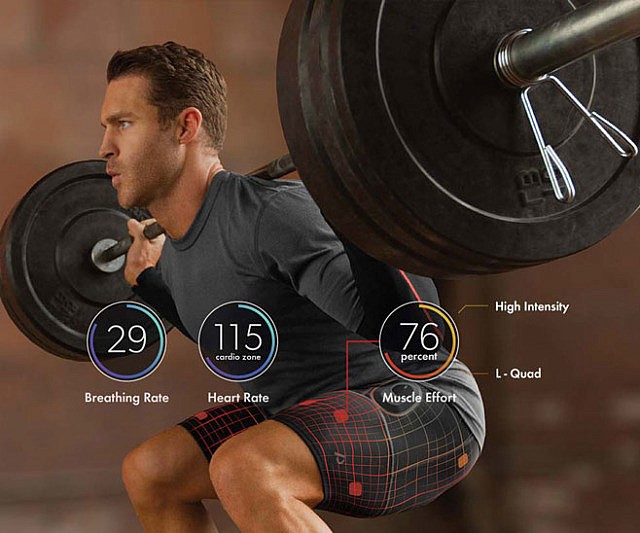
Smart apparel is becoming increasingly sophisticated, with clothing embedded with sensors that can track a variety of biometric data. Compression shirts with built-in heart rate and breathing sensors are becoming common, as are shorts with motion capture capabilities. This offers a convenient and unobtrusive way to collect data during your workouts.
The convenience of these systems is undeniable. You don’t have to worry about attaching sensors to your body or remembering to wear a chest strap. However, there are potential drawbacks. Comfort can be an issue, and washability can be a concern. Accuracy can also be variable, depending on the quality of the sensors and the fit of the clothing.
Several platforms are emerging that integrate data from multiple biometric sources into a single dashboard. These platforms can pull data from HRV monitors, muscle oxygenation sensors, and velocity tracking devices, providing a holistic view of your training. Examples include TrainingPeaks and Hudl.
There are privacy concerns to consider when sharing this much data. Understand the data security policies of any platform you use and be mindful of what information you’re sharing. The benefits of a comprehensive view of your data are clear, but it’s important to weigh those benefits against the potential risks.
Top Biometric Accessories in 2026
The biometric weightlifting accessory market is rapidly evolving. Here are some of the most promising options available in 2026, considering both current technology and projected advancements.
Whoop 4.0: While not solely focused on weightlifting, Whoop’s continuous HRV monitoring and sleep tracking make it invaluable for recovery assessment. It provides a daily recovery score and personalized training recommendations. Pros: Comfortable, comprehensive data, user-friendly app. Cons: Subscription-based, limited weightlifting-specific metrics. Target User: All levels. Value: High, particularly for those focused on recovery.
Moxy Monitor BT: A leading NIRS device for muscle oxygenation monitoring. It provides real-time SmO2 data, allowing you to optimize rep ranges and rest times. Pros: Accurate, reliable, provides valuable insights. Cons: Expensive, requires some technical knowledge. Target User: Intermediate to advanced lifters. Value: High, for those serious about optimizing muscle performance.
GymAware PowerTool: A highly accurate LPT system for measuring barbell velocity and power. It provides precise data for VBT, helping you autoregulate your training. Pros: Extremely accurate, durable, provides detailed data. Cons: Expensive, requires a fixed setup. Target User: Advanced lifters and coaches. Value: Very high, for those committed to VBT.
Kratos VBT: A more affordable and portable VBT solution using IMU technology. It tracks velocity, power, and other key metrics. Pros: Affordable, portable, easy to use. Cons: Less accurate than LPT systems. Target User: Intermediate lifters. Value: Good, for those wanting to experiment with VBT without a large investment.
Athos Smart Clothing: Compression apparel with integrated sensors that track muscle activity, heart rate, and breathing. Pros: Convenient, unobtrusive, provides a variety of data. Cons: Accuracy can be variable, washability concerns. Target User: All levels. Value: Moderate, for those prioritizing convenience and a broad overview of physiological data.
Hex Performance Wear: Smart shorts that utilize motion capture technology to analyze lifting technique and provide feedback. Pros: Focuses on form and technique, provides personalized insights. Cons: Limited data compared to other sensors. Target User: Intermediate lifters looking to improve technique. Value: Moderate, for those focused on form correction.
Forme Life Smart Mirror: While a larger investment, the Forme Life mirror integrates biometric data with guided workouts and personalized feedback. Pros: All-in-one solution, provides a comprehensive training experience. Cons: Very expensive. Target User: Advanced lifters with a significant budget. Value: Potentially high, for those seeking a complete smart gym experience.
Data Interpretation: Making Sense of It All
You’ve collected a wealth of biometric data – now what? The key is to move beyond simply looking at individual data points and focus on trends over time. A single low HRV score isn't necessarily cause for alarm, but a consistent downward trend is a red flag.
Common pitfalls in data interpretation include focusing too much on daily fluctuations and failing to establish a baseline. You need to know what your normal range is before you can identify meaningful changes. Remember that data is context-dependent; factors like sleep, stress, and nutrition can all influence your biometric readings.
A coach or trainer with experience in biometric data analysis can be invaluable. They can help you identify patterns, interpret the data in the context of your training goals, and make informed adjustments to your program. Don’t be afraid to seek expert guidance.
Finally, avoid paralysis by analysis. It’s easy to get so caught up in the data that you forget to lift! Use the data to inform your decisions, but ultimately trust your body and listen to your intuition. The goal is to enhance your training, not to overcomplicate it.
No comments yet. Be the first to share your thoughts!